
How AI Is Redefining What Robotic Arms Can Do
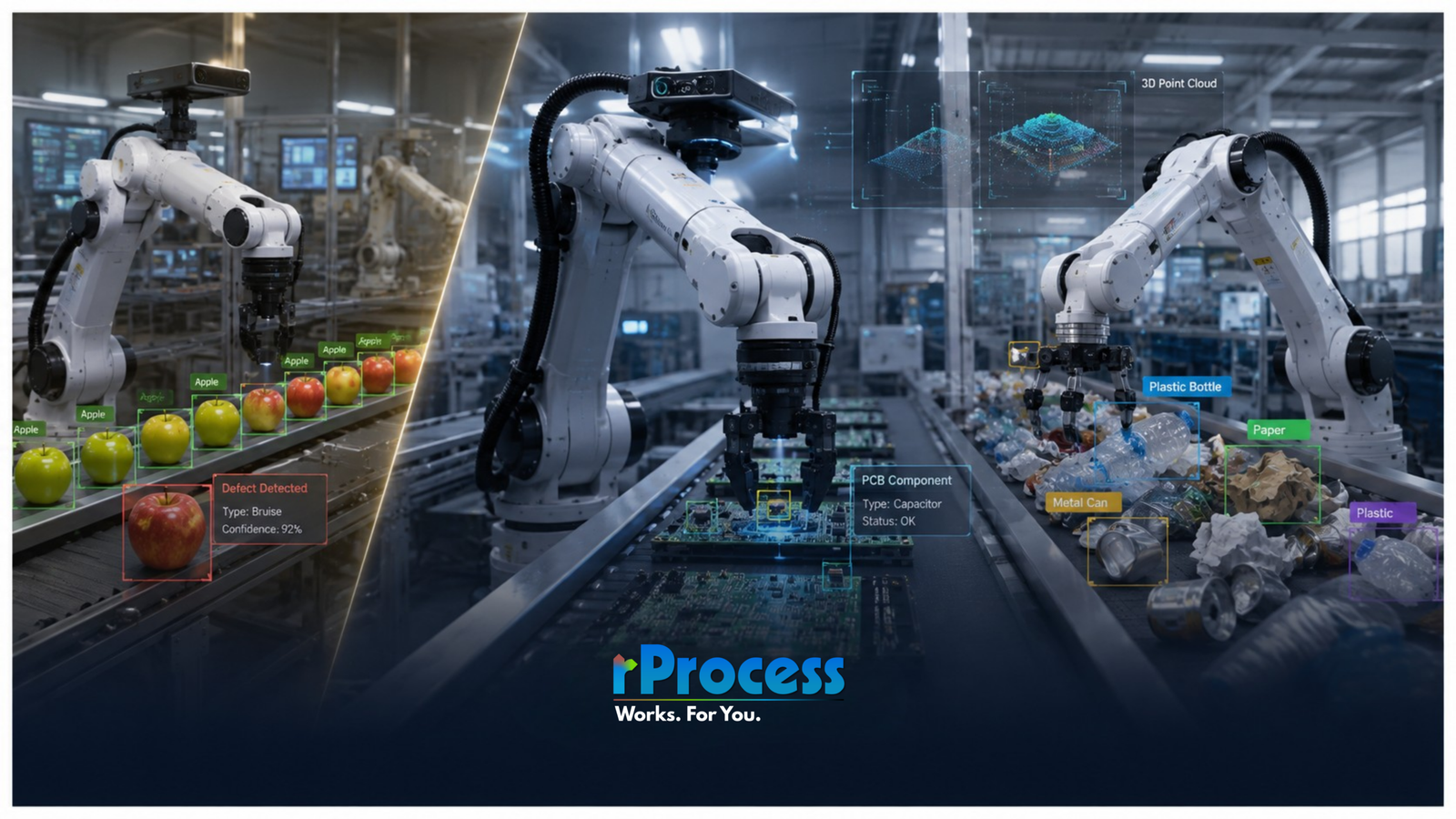
How AI-Powered Robotic Arms Are Reshaping Industries
Robotic arms have transformed manufacturing and industrial automation for decades. But the next generation of AI-powered robotic arms is changing what these machines can actually do.
Traditional robotic arms were designed to repeat predefined movements with speed and precision. Today, artificial intelligence, computer vision, machine learning, and real-time data are enabling intelligent robotic arms to perceive their surroundings, make decisions, adapt to changing conditions, and improve their performance over time.
This shift from programmed automation to AI-powered robotics is helping manufacturers and other industries build more flexible, intelligent, and autonomous systems.
How AI-Powered Robotic Arms Differ from Traditional Robots
Traditional industrial robotic arms typically operate according to predefined instructions. They perform extremely well in controlled environments where the location, orientation, and characteristics of objects remain predictable.
AI changes this model by allowing robotic systems to respond to variation.
With AI in robotics, robotic arms can:
- Use computer vision to identify objects and environments
- Process data from cameras and 3D sensors
- Detect objects and recognize patterns
- Adjust movements in real time
- Identify defects and anomalies
- Learn from historical and real-time data
- Respond to changing operating conditions
- Improve performance through continuous feedback
This makes AI-powered robotic arms particularly valuable in environments where tasks cannot be completely defined in advance.
How AI Makes Robotic Arms Smarter
AI gives robotic arms capabilities that go beyond repetitive motion.
Computer vision allows robots to see and interpret their environment. Cameras and 3D sensors can help identify objects, estimate their position, recognize defects, and determine how a robotic arm should interact with them.
Machine learning enables robotic systems to identify patterns in large amounts of data and improve decision-making over time.
Together, these technologies allow AI-powered industrial robots to perform tasks such as:
- Object detection and recognition
- Automated quality inspection
- Adaptive picking and placing
- Defect detection
- Machine tending
- Sorting and classification
- Precision assembly
- Material handling
- Predictive maintenance
- Real-time process optimization
The result is a move toward intelligent automation, where robotic systems can respond to real-world conditions instead of simply repeating fixed instructions.
What Technologies Power an AI-Enabled Robotic Arm?
An AI-enabled robotic arm is more than a mechanical system. It combines robotics hardware with sensors, software, data, and AI models.
Computer Vision
Computer vision enables robotic arms to interpret images and video, recognize objects, detect defects, and understand their working environment.
Machine Learning
Machine learning models help robots identify patterns, classify objects, predict outcomes, and improve decisions based on data.
3D Vision and Sensors
3D cameras and other sensors provide spatial information that helps robotic systems understand object position, depth, orientation, and movement.
Edge Computing
Edge computing allows AI processing to happen closer to the robotic system, supporting low-latency decision-making and real-time control.
Real-Time Data
Continuous streams of sensor and operational data help AI-powered robotic systems monitor conditions, adapt actions, and improve performance.
AI-Ready Training Data
High-quality training data is essential for developing reliable computer vision and machine learning models. Accurate annotation, ground truth, validation, and continuous feedback help AI systems learn from real-world scenarios.
This data foundation is particularly important as robotics moves toward physical AI, where AI systems increasingly interact with and act within the physical world.
AI Robotic Arms Across Industries
Manufacturing
In manufacturing, AI-powered robotic arms can support assembly, machine tending, quality inspection, material handling, and adaptive automation.
Automotive
Automotive manufacturers use robotic systems for welding, painting, assembly, inspection, and material movement. AI can improve adaptability, quality control, and process optimization.
Logistics & Warehousing
AI-powered robots can support sorting, picking, packing, palletizing, and material handling, helping warehouses respond to changing inventory and operating conditions.
Waste Management
Computer vision and AI can help robotic systems identify and classify different types of waste, enabling automated sorting and robotic picking.
Healthcare & Pharmaceuticals
Robotic automation can support sterile handling, packaging, laboratory operations, and other applications where precision and repeatability are critical.
Food & Consumer Products
AI-powered robotic systems can support sorting, inspection, packaging, and handling where products can vary in size, shape, and appearance.
Electronics
Robotic arms can perform precision component placement, inspection, handling, and cleanroom automation.
The Role of Computer Vision in Robotic Automation
One of the most important technologies behind intelligent robotic arms is computer vision.
A robot cannot adapt to its environment unless it can understand what is happening around it.
Computer vision enables robotic systems to:
- Detect and classify objects
- Locate objects in 2D and 3D space
- Identify defects
- Recognize changing environments
- Track objects and movements
- Support precision picking
- Enable automated inspection
- Improve robotic decision-making
This makes computer vision for robotics an important component of modern industrial automation.
For AI systems to perform these tasks reliably, they need high-quality, representative training data covering normal scenarios, variations, and edge cases.
The Importance of Data for AI-Powered Robotics
Better robotic intelligence starts with better data.
AI models used in robotic systems depend on datasets that accurately represent the environments, objects, and situations the robot will encounter.
- Image and video data
- 2D and 3D annotations
- Object detection datasets
- Segmentation data
- Sensor data
- Ground truth datasets
- Edge-case examples
- Quality-validated training data
Accurate AI training data helps computer vision and machine learning models learn to recognize objects, understand environments, and make reliable predictions.
For robotics companies, this means data quality can directly influence how reliably an AI-powered robotic system performs in the real world.
How rProcess Enables AI-Powered Robotics
At rProcess, we help robotics companies build the AI data foundation required for intelligent automation and computer vision.
Our capabilities support the creation of high-quality, AI-ready datasets for robotic systems, including image and video annotation, object identification, classification, segmentation, quality assurance, and edge-case identification.
Explore our AI Data Solutions to learn how rProcess supports AI-ready data workflows.
Case Study: AI-Powered Waste Management Robotics
rProcess supports waste management robotics companies with precision-annotated computer vision datasets designed to help robotic systems identify and segregate different types of waste.
Our contribution includes:
- Annotation of Plastic, Fiber, Metal, Paper, Glass, Organic, and Hazardous waste
- Computer vision data for robotic picking systems
- Identification of difficult and uncommon edge cases
- Quality assurance and validation workflows
- Data supporting continuous learning and model improvement
- Scalable annotation workflows for real-world robotics applications
By combining domain expertise, AI data annotation, computer vision data, and scalable quality workflows, rProcess helps robotics companies develop AI systems that can perform reliably in complex real-world environments.
The Future of AI-Powered Robotic Arms
The future of robotics is moving beyond fixed automation.
As AI, computer vision, machine learning, physical AI, and intelligent automation continue to develop, robotic arms are becoming more capable of operating in environments that require perception, adaptation, and decision-making.
The hardware may provide the movement, but data and AI provide the intelligence.
With accurate training data, precise annotation, continuous feedback, and robust validation, robotic arms can become more adaptable, accurate, and capable of handling increasingly complex tasks.
At rProcess, we help build the AI-ready data foundation behind intelligent robotics, enabling businesses to develop smarter automation systems designed for real-world environments.
Explore AI-Powered Robotics with rProcess
If you're exploring AI-powered robotics, computer vision, or intelligent automation, let's connect.
Talk to rProcess